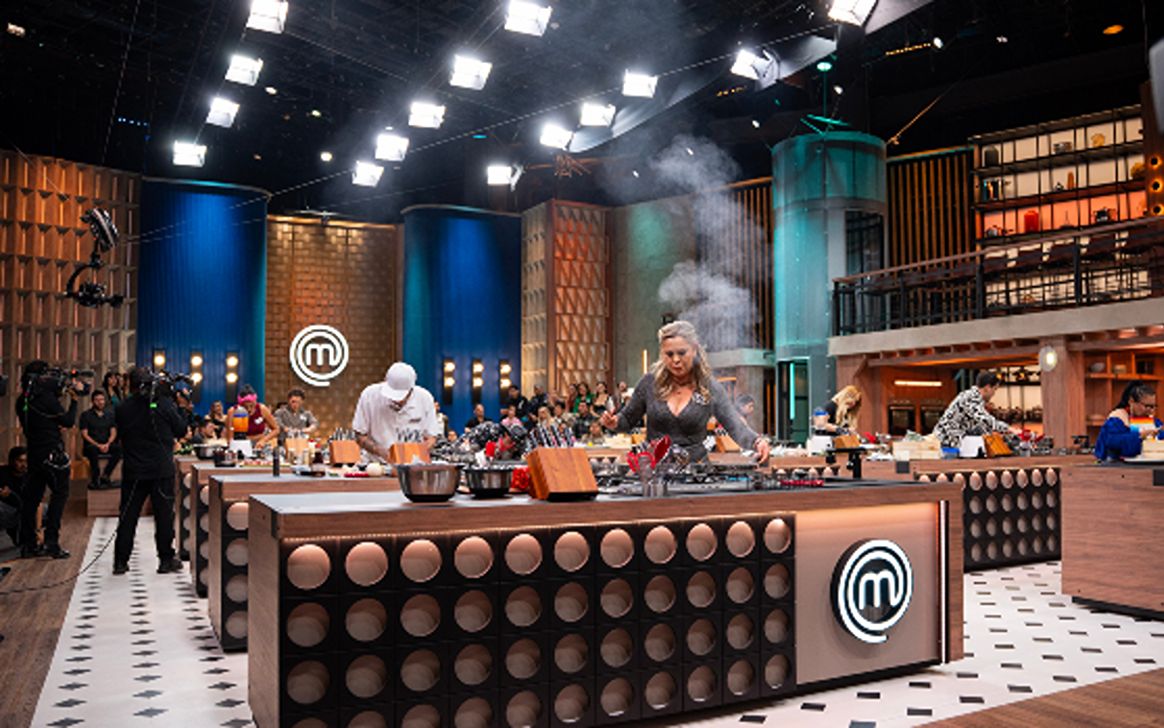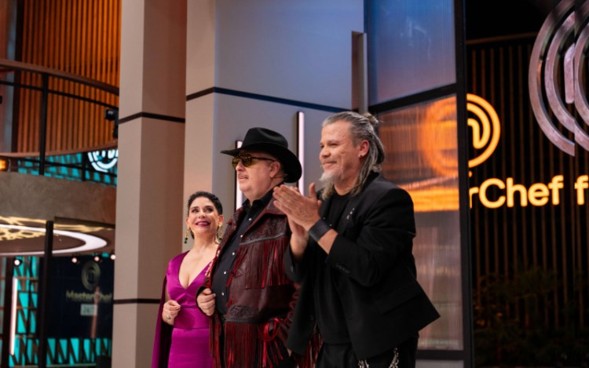
Endemol Shine Boomdog challenged the conventions of the world’s most famous cooking format with the first live cohabitation version, produced for TV Azteca and also available on Disney+. Frank Scheuermann explains what they’re learning from an experiment that could shape the future of major franchises.
The new version of ‘MasterChef’ in Mexico is, for its producer, Endemol Shine Boomdog, one of the most transgressive and risky interventions it has ever made on a format.
Since May 17th, the world’s first 24/7 edition of the popular cooking show has been airing on TV Azteca. And, thanks to an unprecedented partnership between the Mexican broadcaster and Disney+, it’s also available on the platform.
For Frank Scheuermann, chief content officer of the production company Banijay Americas, taking a cooking competition towards a live format, without altering the heart of an iconic international brand, is proving to be a learning experience. But he keeps one.
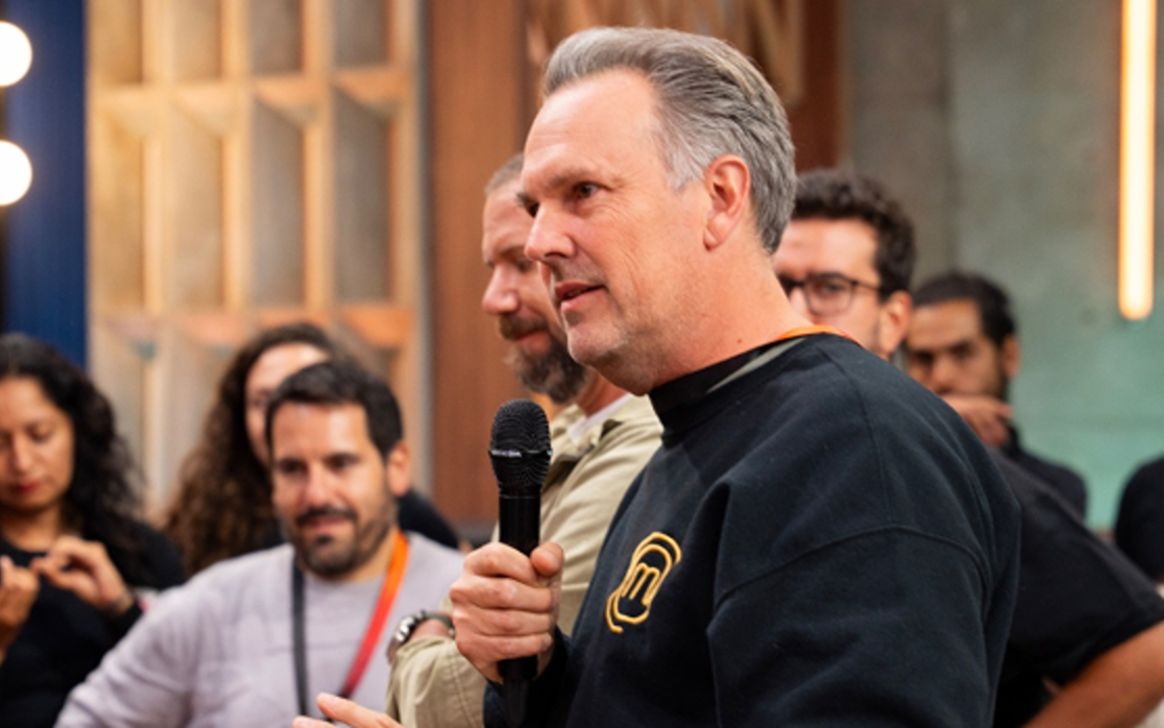
“The biggest question was whether this show could be done live, without editing. For me, that’s the biggest lesson: yes, it can be done,” Scheuermann says in an interview with Cveintiuno.
First launched in the UK in 1990, ‘MasterChef’ has aired over 750 seasons in more than 70 territories, totaling over 16,000 episodes. But no one had ever tried a 24/7 version of the franchise.
The idea came to Scheuermann during an international summit of ‘MasterChef’ producers, convened by Banijay Entertainment around a central question: how to give the format another 20 years of life? The Colombian producer based in Mexico City, who was not originally going to attend, arrived with the proposal to take it towards a 24/7 structure.
The proposal generated an intense discussion between producers and brand guardians.
“They told us we were crazy, that it wouldn’t be possible, that it would cost too much. Others said that if it wasn’t edited, the beauty shots wouldn’t be any good, nor would anything about ‘MasterChef’. It was a very controversial issue,” she recalls.
So the presentation, which was supposed to last 15 minutes, ended up being a conversation of almost an hour. But it had a happy ending: the proposal received authorization from Franc Roddam, creator of the format, to be presented by Endemol Shine Boomdog in the territories where it operates.
And in Mexico, TV Azteca quickly embraced the idea to develop an adaptation where, for the first time, participants live, train, and compete under one roof, in an environment designed to enhance technique, mentorship, and professional development.
“When we brought this idea to TV Azteca, it opened doors like nothing I had ever seen. They embraced the idea immediately, and from then on, we just started building until it became a reality,” Scheuermann summarizes.
‘MasterChef 24/7’ premiered on May 17 and required a broader operation to be set up around the format, with a dynamic capable of broadcasting the content in real time.
But for Endemol Shine Boomdog, behind the bet lies a broader interpretation of how entertainment formats can extend their value, especially at a time when screens are looking for more content from proven brands.
“All processes stem from the needs that exist in the market, in the territories where we are, in our clients and in what is happening with television programs,” explains the producer.
Under that logic, when a format works in a territory, its success generates the need to expand the model or find proposals capable of producing similar results at other times of the year.

For the executive, this conversation has become especially relevant around the 24/7 model, which has ceased to be merely an extension of airtime and has become a tool for audience building and commercial exploitation. A single IP address can thus feed broadcast television, streaming and digital platforms, and social media, in addition to generating conversation, engagement, and new avenues for monetization.
“24/7 isn’t just about content. It’s not just a format that’s getting longer and more accessible, but it also opens up more opportunities to leverage it in other areas,” Scheuermann says.
“We are discovering ways for the same content to touch different platforms and different ways of monetizing, and thus become a bigger business.”
The learning process isn’t entirely new. Endemol Shine Boomdog has already been experimenting with live production with several seasons of ‘La casa de los famosos’ (an adaptation of ‘Big Brother’), where the constant cohabitation has allowed the format to become a continuous source of content.
Furthermore, the expansion alters the economics of the format. Although the total cost of a 24/7 production is higher, Scheuermann states that the scale allows for a reduction in the cost per episode and opens more commercial opportunities around the same brand.
However, the executive clarifies that this equation only works when the format has a sufficiently solid structure and emotionally resonates with the audience, capable of sustaining longer broadcasts without losing its appeal. Thus, the challenge lies in building new viewing habits without diminishing the strength of the original format.
“’MasterChef’ is a spectacular format. It’s a very human format that doesn’t just talk about cooking. It talks about people’s stories in the kitchen. About traditions and food, which is a topic that affects us all. And you can’t talk about food without talking about love,” he points out.
This unprecedented adaptation of ‘MasterChef’ also reflects a line of work in which Endemol Shine Boomdog is already an expert: intervening in global formats, adjusting them to the needs of clients, but without modifying their essence.
For Scheuermann, that balance is a central part of the company’s work, as it has already demonstrated in formats such as ‘The House of the Famous’, ‘Survivor’ or ‘Deal or No Deal’.
“We have had to learn to adapt. To adapt to our reality, to our schedules, to having programs of three hours, of two hours daily, from Monday to Friday, from Monday to Saturday, from Monday to Sunday, and budgets that can be achieved for our territory,” he acknowledges.
And he concludes: “We are building something truly groundbreaking, and as people who are creating and taking risks to do different things, it is very rewarding.”