In a rapidly changing market, developing fiction cannot be limited to chasing current trends.
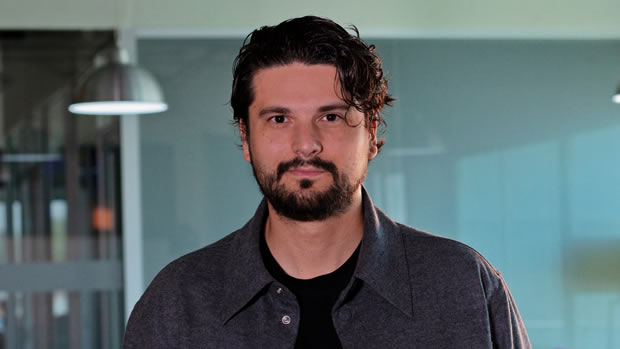
At least that’s how Santiago Zapata, executive vice president of content at A Fábrica México & US Hispanic, sees it, for whom the speed with which the priorities of buyers and audiences change forces production companies to look beyond the trend of the moment.
Zapata joined Banijay’s production company in Mexico last August and has been developing a slate of fiction series ever since. But rather than focusing on trends, the executive seeks to prioritize timeless elements.
“The market is a living entity, it is constantly evolving. The moment you manage to detect a trend, I think it is already too late to pursue it,” Zapata says in an interview with Cveintiuno.
That’s why A Fábrica México & US Hispanic has been developing a diverse slate of dramas, thrillers, comedies, action, true crime and movies this past year, while also exploring new avenues such as vertical dramas.
But for Zapata, more important than anticipating what genre the next buyer will look for is identifying what elements can continue to connect with the audience when those projects finally reach the screen.
“Instead of thinking about what a specific buyer is looking for, what we try to do is be very connected to what motivates the viewer. What is the viewer looking for? What kinds of stories will resonate with them?” he explains.
The approach is especially relevant in fiction, where the processes from development to production can extend over years and coexist, along the way, with changes in executives, editorial strategies or platform priorities.
Therefore, one of the lessons learned from A Fábrica has been to separate the current trends from those dramatic engines capable of surviving those cycles.
The above applies especially to melodrama, another genre that the production company is promoting.
“Melodrama as a genre doesn’t have to bow its head in Latin America. Today we all know that the moral dilemmas of melodrama capture and retain audiences,” he argues.
“The moral dilemmas of melodrama are human moral dilemmas. And they will always be the same, because they are the emotions, feelings, and experiences we go through,” he adds.
“What can change are the dramatic arenas: at what point in life, in what social or cultural circumstances these dilemmas occur,” he adds.
But looking towards lasting narrative elements does not mean ignoring new forms of consumption.
That’s why one of the territories that A Fábrica is currently exploring is that of vertical dramas, a segment that Zapata believes is growing too fast to ignore.
“It’s a space that is growing at a rate that would be irresponsible to ignore,” he says.
“We’re constantly talking about what worked, what didn’t work, and how they’re implementing new technologies in the production of this content. It’s still fertile ground for innovation, for being very creative,” he explains.
The search for new ways of developing is also modifying the internal structure of A Fábrica.
In June, the company brought on director and screenwriter Max Zunino as executive director of development, a decision Zapata interprets as a way to introduce a screen-focused perspective from the earliest stages of each project.
“In a market where it’s not very common to shake up traditional operating methods, executives are executives and directors are directors. Here we’re putting a creative with great on-screen vision at the forefront of development,” he explains.
The intention is to detect problems from that stage that traditionally appear much later, when the project is already approaching production.
“If you have a great director and screenwriter leading that process, you’re saving yourself headaches when the content eventually reaches the screen, because he’s seeing it from that perspective from the beginning.”
Another key signing has been that of Venezuelan writer, screenwriter and creator Leonardo Padrón, with whom Banijay Americas maintains an alliance to develop fiction through A Fábrica México & US Hispanic.
Padrón is one of the most recognized melodramatic screenwriters in Latin America and, in recent years, has poured his expertise into shorter and premium fiction projects with Netflix such as ‘Pálpito’ or ‘Accidente’, which have managed to lead the platform’s consumption rankings worldwide.
But the work to increase the chances of those developments reaching the screen doesn’t end with the creative aspect.
Zapata, whose career includes more than a decade linked to independent cinema, says he is also transferring to television a logic based on finding partners, territories, incentives and co-production structures capable of improving the viability of each project.
“In the world of independent cinema, creativity was not only about the script and the production, but also about the way producers collaborated internationally to maximize the advantages and opportunities available in a country,” he points out.
“We are also applying creativity to the way we establish business models,” he concludes.